

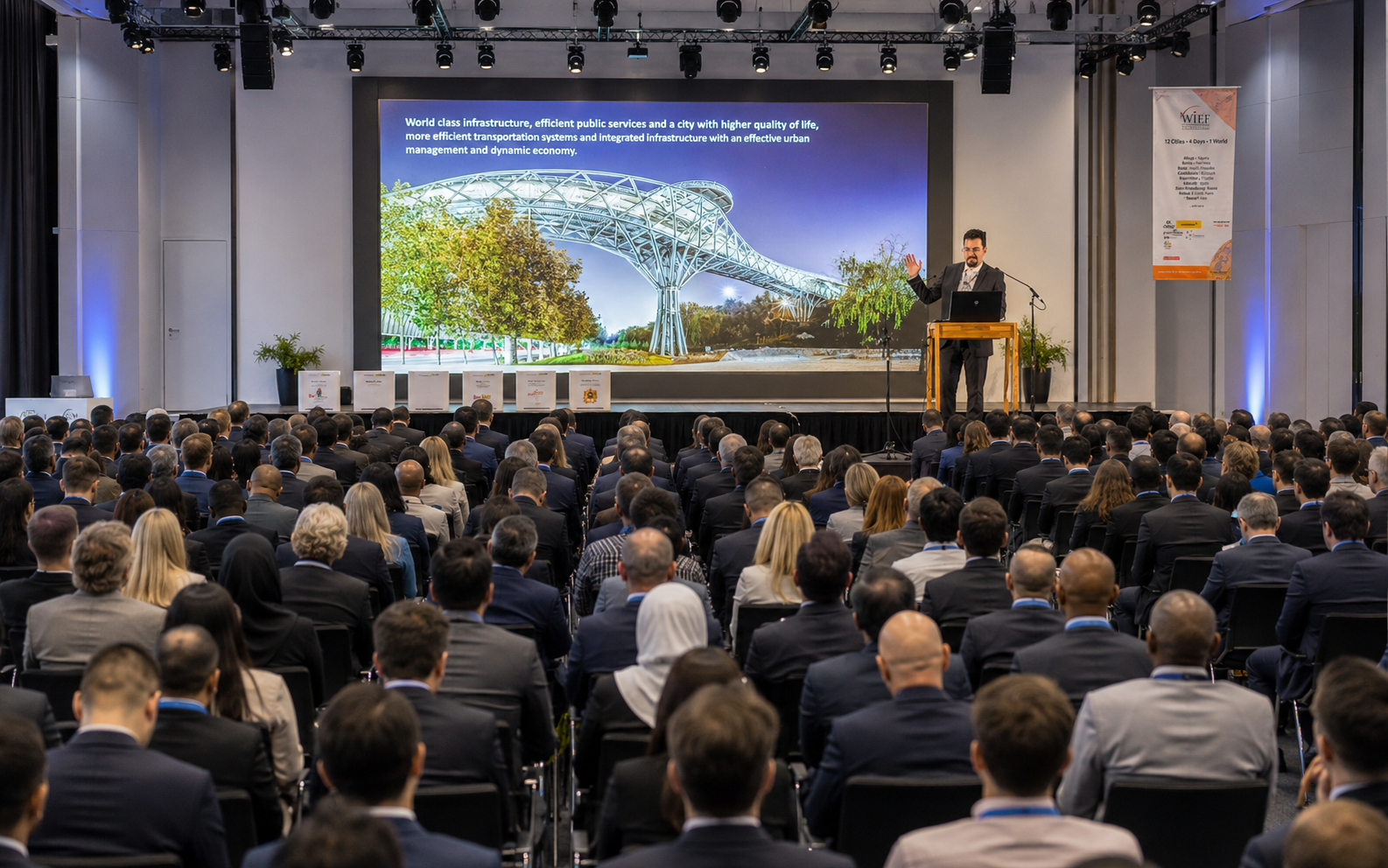
Smart Cities • Digital Transformation • AI • Urban Innovation
Smart Cities & Digital Transformation
Exploring how artificial intelligence, connected infrastructure, data, technology and citizen-centred innovation are reshaping the cities of tomorrow.
- Smart City Strategy
- AI
- Digital Transformation
- IoT
- Urban Innovation
- Future Cities
Introduction
Building Smarter, More Connected Cities
Smart-city transformation is not simply about technology. It combines digital infrastructure, data, artificial intelligence, mobility, sustainability, governance and citizen participation to improve urban quality of life.
A successful smart city connects technology with people. From intelligent transportation and digital public services to AI-driven decision-making and sustainable infrastructure, smart-city strategies can help cities become more efficient, resilient, inclusive and responsive to the needs of their citizens.
Dana Bina works across that intersection: technology strategy, digital transformation and urban innovation, with a consistent argument that programmes fail on governance and data foundations far more often than on technology. More about Dana Bina.
0
Documented international smart-city engagements
0
Interconnected pillars of a smart city
0
Ecosystem domains covered
Ecosystem
The Smart City Ecosystem
Eight connected domains. None of them delivers value alone — the outcomes appear where they overlap.
01
Artificial Intelligence
AI-powered urban analytics, predictive systems, automation and smarter decision-making.
02
Intelligent Transportation
Connected transit systems, traffic optimization, EV infrastructure, autonomous mobility and multimodal transportation.
03
IoT & Connected Infrastructure
Sensors, connected assets, real-time data, infrastructure monitoring and intelligent city operations.
04
Digital Government
Digital public services, open data, automation, citizen platforms and more efficient government operations.
05
Sustainability & Smart Energy
Renewable energy, smart grids, efficient buildings, resource management and environmental monitoring.
06
Citizen Engagement
Digital participation, inclusive public services, transparency, accessibility and community engagement.
07
Urban Data & Analytics
Using real-time information and analytics to understand how cities operate and make evidence-based decisions.
08
Cybersecurity & Resilience
Protecting critical infrastructure, digital services, data systems and connected urban environments.
International perspective
A Global Perspective on Smart City Development
Documented conference keynotes, forum sessions and instruction across Europe, Asia and international online programmes. Some listings appear under the name Mahdi Bina.
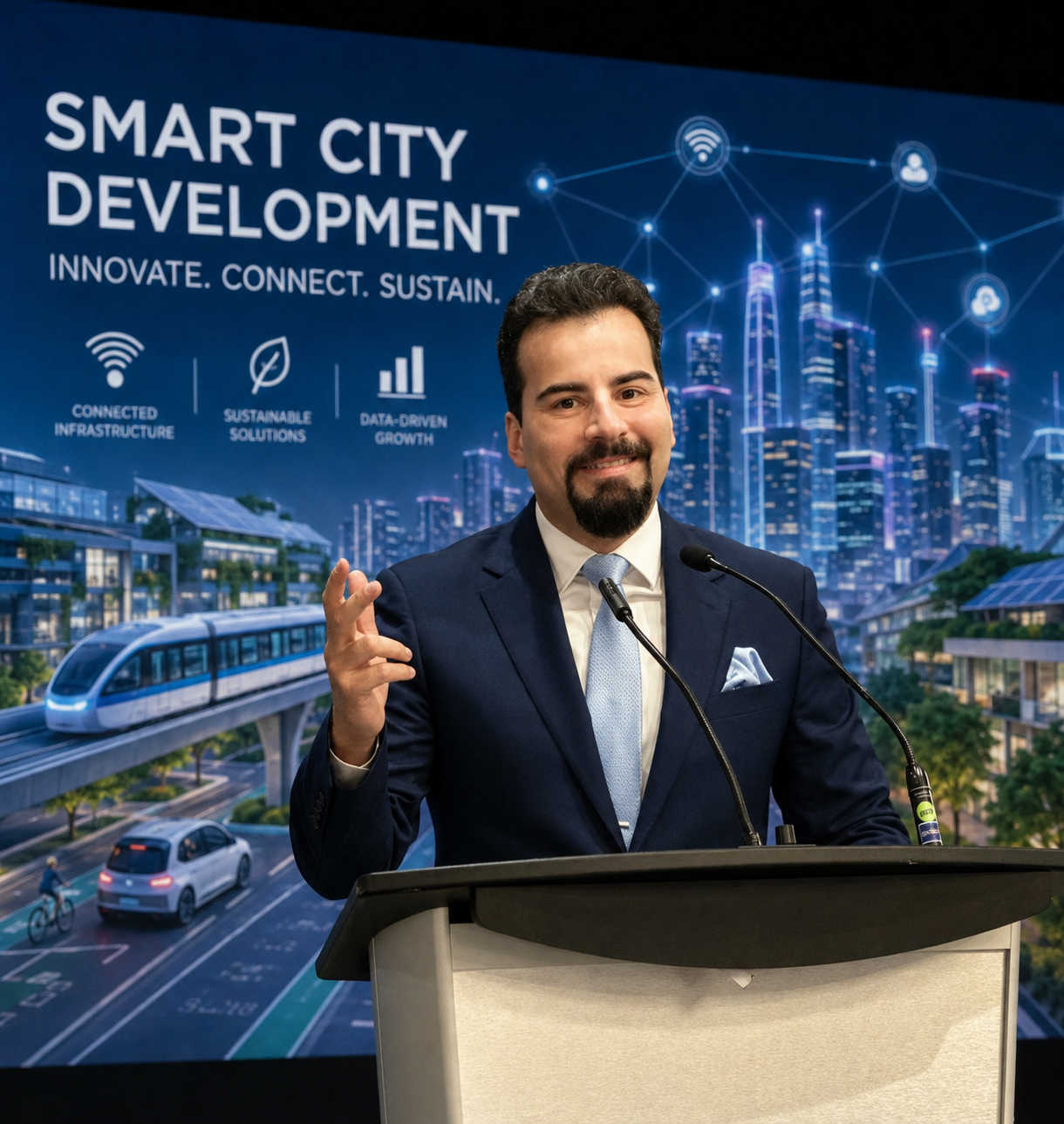
Smart City Development keynote: innovate, connect, sustain. Smart City Development work spans connected infrastructure, intelligent transportation, sustainable urban development and data-driven growth — presented to municipal, academic and industry audiences across multiple markets.
- Connected infrastructure
- Intelligent transportation
- Sustainable urban development
- Data-driven urban growth
2021
World Summit on the Information Society (WSIS) Forum 2021
Speaker — Online / Geneva
Topic: IoT Cybersecurity Vulnerabilities and Considerations in Smart Cities After the Pandemic
Dana Bina participated as a speaker at the WSIS Forum 2021, addressing IoT cybersecurity vulnerabilities and considerations for smart cities after the pandemic, set in the wider context of digital transformation and the future development of connected cities. The WSIS Forum brings together international organizations including the ITU, UNESCO, UNDP and UNCTAD; Dana spoke in his own professional capacity and did not represent those organizations.
- Internet of Things
- Cybersecurity
- Smart Cities
- Digital Transformation
- Technology Policy
- Post-pandemic transformation
2020
ITU-related Smart Sustainable Cities / IoT Academy training programme
Instructor — International, delivered online
Dana contributed as an instructor in an ITU-related IoT and Smart Sustainable Cities training programme for professional audiences, teaching smart buildings, cybersecurity in smart cities, IoT ecosystems and platforms, networks, applications, regulation and technology policy. The role was instructional; it does not imply employment by the ITU.
- Smart Buildings
- Cybersecurity in Smart Cities
- IoT Ecosystems
- IoT Platforms
- Networks
- IoT Applications
- Regulation & Technology Policy
2020
European Digital Week, International Conference on Smart Cities, Smart Infrastructures and Smart Buildings
Conference Speaker — Europe, delivered online · September 23–24, 2020
Conference speaker at the International Conference on Smart Cities, Smart Infrastructures and Smart Buildings, part of European Digital Week, covering how IoT and digital transformation change the way buildings and urban infrastructure are planned and operated.
- Smart Cities
- Smart Buildings
- Smart Infrastructure
- IoT
- Digital Transformation
- Urban Technology
2019
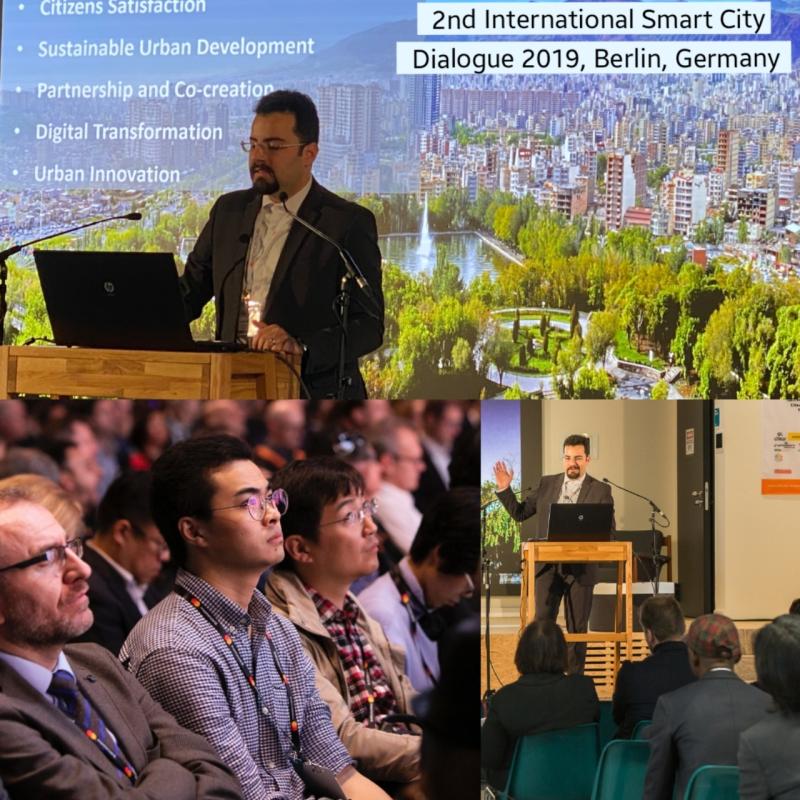
2nd International Smart City Dialogue on Urban Mobility
Keynote Speaker — Berlin, Germany · November 13–16, 2019
Keynote speaker in Berlin on the conditions that make smart mobility work in practice rather than in pilot projects. Dana argued that mobility programmes fail on governance and data foundations far more often than on technology.
- — Open data and clear data standards, so systems from different vendors and agencies can actually interoperate.
- — Unified IoT sensor networks, rather than parallel single-purpose deployments that cannot be reconciled.
- — Cybersecurity and industry-wide security standards, treated as a precondition of connected mobility rather than a later phase.
- Smart Mobility
- Future Cities
- Open Data
- IoT
- Cybersecurity
- Mobility as a Service
- Traffic Management
- Public-Private-People Partnerships
- Sustainable Urban Development
2019
Asian Smart City Conference
Speaker — Gaziantep, Turkey
Speaker at the Asian Smart City Conference, held in connection with the Asian Mayors Forum, on collaboration between cities and on keeping citizen quality of life — not technology procurement as the measure of a smart-city programme. Technology is the foundation; people are the purpose.
- Smart Cities
- Sustainability
- City Collaboration
- Innovation
- Smart Nation
- Technology
- Quality of Life
Smart-city governance roles
Historical appointments in smart-city planning and international city cooperation. Official English titles and dates are stated conservatively and are being confirmed against organizational records.
Secretary of the Smart Cities Committee
Asian Mayors Forum · Dates to be confirmed
Committee work on smart-city cooperation between member cities, including knowledge exchange, conference programming and the technology and governance topics placed in front of city representatives.
Head of Smart Tehran Committee in Strategic Planning
Smart Tehran · Dates to be confirmed
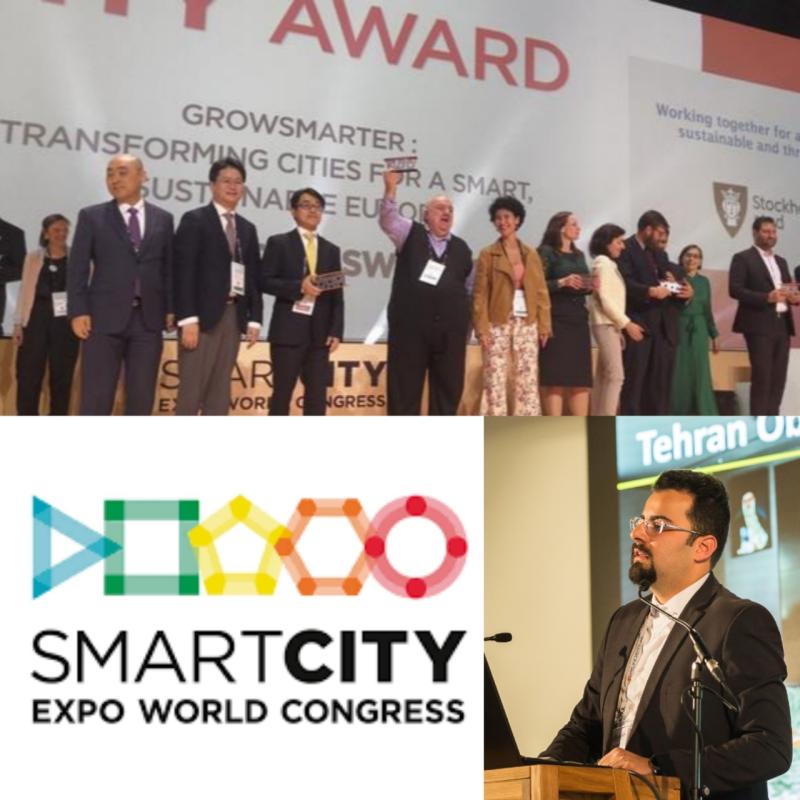
Strategic-planning work within Tehran's smart-city programme: benchmarking against comparable cities, digital-transformation planning, sustainability priorities and the sequencing of urban innovation initiatives. Tehran's recognition as a 2019 World Smart City Awards finalist relates to the city's programme; it is not a personal award.
Note on Tehran: the city’s recognition as a finalist at the 2019 World Smart City Awards relates to the municipal programme, not to any individual. It is recorded here as programme context only. Related pages: keynote speaking, awards & recognition.
Framework
What Makes a City Smart?
Six interconnected pillars around a single objective. Technology is an enabler, not the ultimate purpose.
People
Residents, workers and visitors whose daily experience is the real measure of any programme.
Technology
AI, IoT, connectivity and platforms — enablers of better services, never the objective itself.
Infrastructure
Networks, buildings, utilities and public assets, instrumented and maintained on evidence.
Better Quality of Life
Mobility
Transit, active transportation, freight and EV systems planned as one connected network.
Sustainability
Energy efficiency, emissions reduction, resource management and climate resilience.
Governance
Data standards, procurement, privacy, security and accountability that hold the system together.
Artificial intelligence
Artificial Intelligence and the Future of Cities
AI in smart cities refers to the use of artificial intelligence, machine learning, predictive analytics and automation to help cities understand real-time conditions, optimize public services, manage infrastructure and improve decision-making.
Related work on applied AI is documented on the AI & marketing page.
- Traffic forecasting and congestion management
- Public transportation optimization
- Energy efficiency and demand prediction
- Emergency response and public safety
- Predictive infrastructure maintenance
- Digital government and service automation
- Environmental and air-quality monitoring
- Urban planning and scenario modelling
- Citizen services and multilingual support
- Predictive analytics across city operations

Digital twins
Digital Twins & Data-Driven Urban Planning
A digital twin is a virtual representation of a physical urban environment, connected to real-world data so planners can test decisions before they are built.
- Simulation of urban change before it is built
- Infrastructure planning and capital sequencing
- Transportation and mobility modelling
- Emergency preparedness and scenario testing
- Construction coordination and clash detection
- Energy optimization across districts
- Sustainability and climate-resilience planning
Content hub
Smart City Insights
An editorial series in preparation on smart cities, AI, IoT, mobility, digital twins and urban innovation.
Smart City Fundamentals
What Is a Smart City?
A working definition of the smart city, the services it changes first, and how progress is measured beyond technology procurement.
Dana Bina · 6 min read · Planned
Artificial Intelligence
How AI Is Transforming Smart Cities
Where artificial intelligence is already operational in city services — and where it remains a pilot rather than infrastructure.
Dana Bina · 8 min read · Planned
Digital Transformation
Smart Cities and Digital Transformation
Why digital transformation in the public sector depends on operating models and data standards more than on new platforms.
Dana Bina · 7 min read · Planned
IoT
The Role of IoT in Future Cities
Sensor networks, unified deployments and the difference between instrumented assets and usable urban data.
Dana Bina · 6 min read · Planned
Smart Mobility
Smart Transportation and Urban Mobility
Traffic optimization, transit integration, EV infrastructure and mobility-as-a-service in practical sequence.
Dana Bina · 7 min read · Planned
Digital Twins
Digital Twins in Urban Planning
How virtual city models support simulation, planning, energy optimization and emergency preparedness.
Dana Bina · 6 min read · Planned
Cybersecurity
Smart City Cybersecurity
Treating security standards for connected infrastructure as a precondition of deployment, not a later phase.
Dana Bina · 8 min read · Planned
Citizen Engagement
Citizen-Centred Smart City Development
Participation, accessibility and transparency as design requirements for public digital services.
Dana Bina · 5 min read · Planned
Sustainability
Smart Energy and Sustainable Cities
Smart grids, building efficiency and resource management as the measurable side of urban sustainability.
Dana Bina · 6 min read · Planned
Future Cities
The Future of Urban Technology
What changes next in connected infrastructure, AI governance and the economics of urban innovation.
Dana Bina · 7 min read · Planned
Answers
Smart City FAQs
Direct answers to the questions most often asked about smart cities, AI and urban digital transformation.
What is a smart city?
A smart city uses digital technologies, connected infrastructure, data and innovative governance to improve public services, sustainability, mobility, economic efficiency and quality of life.
What technologies are used in smart cities?
Smart cities may use artificial intelligence, IoT sensors, cloud computing, 5G, digital twins, data analytics, smart grids, intelligent transportation systems and cybersecurity technologies.
How is AI used in smart cities?
AI can analyze urban data, predict traffic patterns, optimize energy use, improve public services, identify infrastructure issues and support faster, data-driven decision-making.
What is smart city digital transformation?
Smart city digital transformation is the process of integrating digital technologies, data, connected infrastructure and modern service models into city operations and public services.
What is the role of citizens in a smart city?
Citizens are central to successful smart-city development. Technology should improve accessibility, participation, transparency, safety, convenience and overall quality of life.
What are the main components of a smart city?
Key components typically include smart governance, intelligent mobility, digital infrastructure, sustainability, public safety, connected services, data management and citizen engagement.
Are smart cities sustainable?
Smart-city technologies can support sustainability by improving energy efficiency, reducing congestion, optimizing resources, monitoring environmental conditions and enabling smarter infrastructure management.
What is a smart city digital twin?
A digital twin is a virtual model of a physical environment that can use real-world data to simulate, monitor, analyze and optimize city infrastructure and operations.
Speaking & collaboration
Smart Cities Are About More Than Technology
The future of cities will be shaped by how effectively technology, infrastructure, public policy, business and citizens work together.